
Inside our Dual Dome Observatory
- Domes look better than sheds, there, I said it!
- Domes offer considerable wind obstruction
- Domes offer considerable light ingress
- Domes protect equipment during open/closing procedures
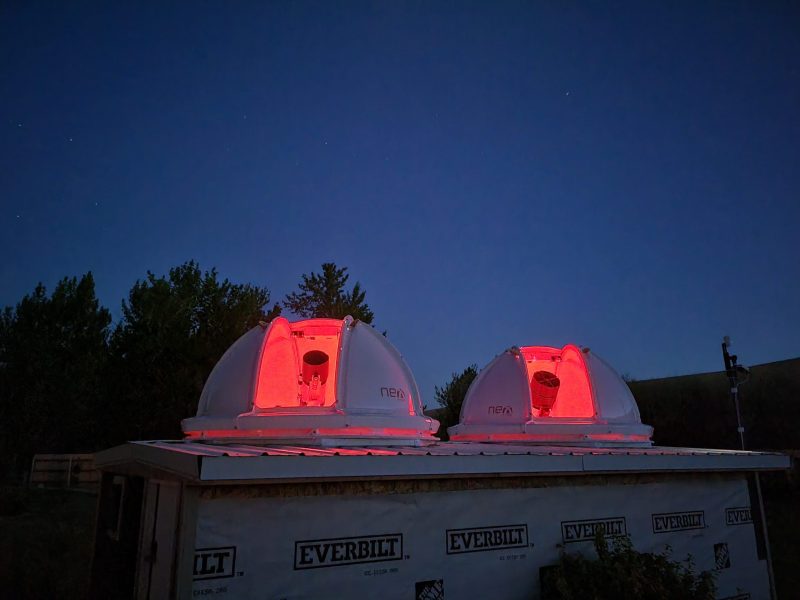
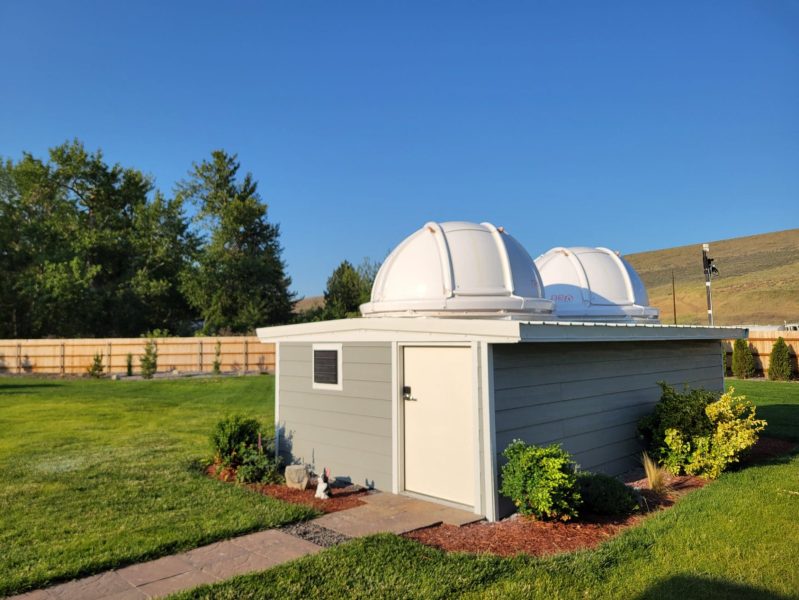
While a few disadvantages, such as a slightly larger startup cost exist, the footprint is also much less considering a rolloff roof for a 20 foot building could require as much as 40+ feet of space or more. An argument could be made that 6 piers could be setup in the same space as 2 piers with a dome, I can hardly keep up with running or controlling 2 fully functional astrophotography rigs at a time, so… 2 domes it is.
Pier & Floor Construction
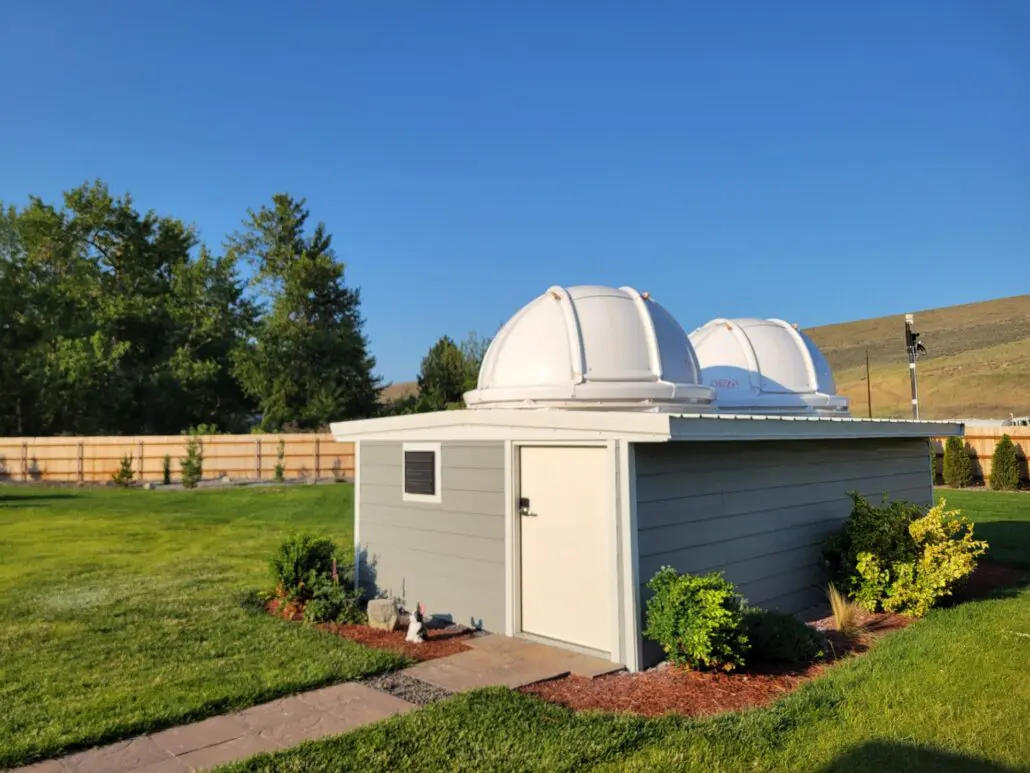
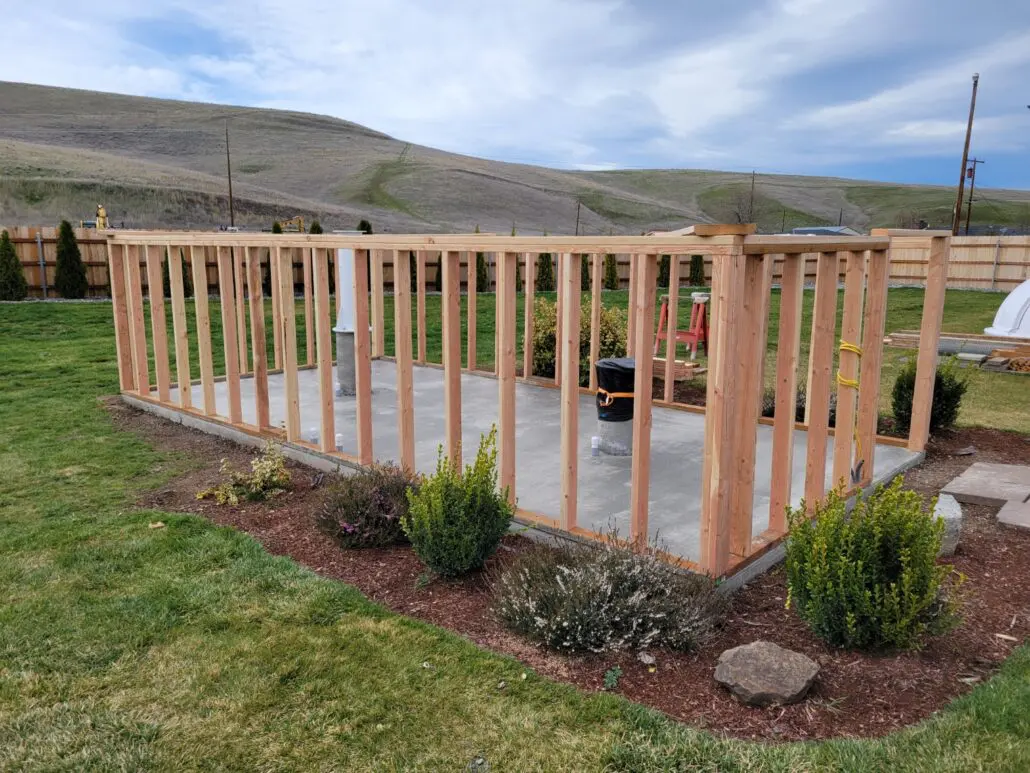
The entire building is a 10′ x 20′ structure with a somewhat short stature height around 54″ tall.
Piers
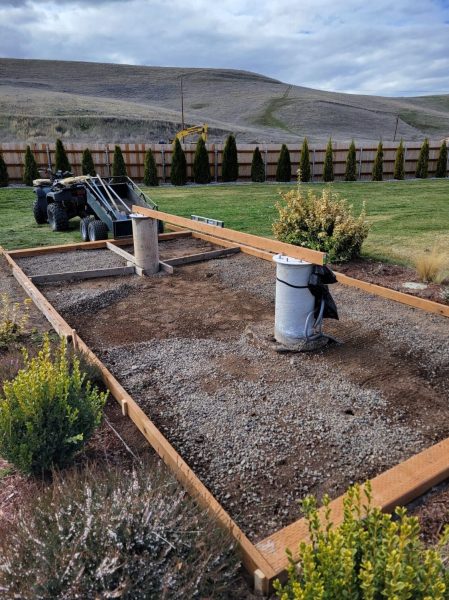
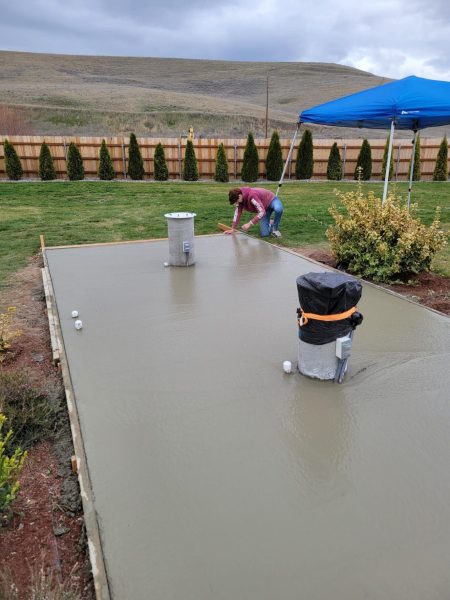
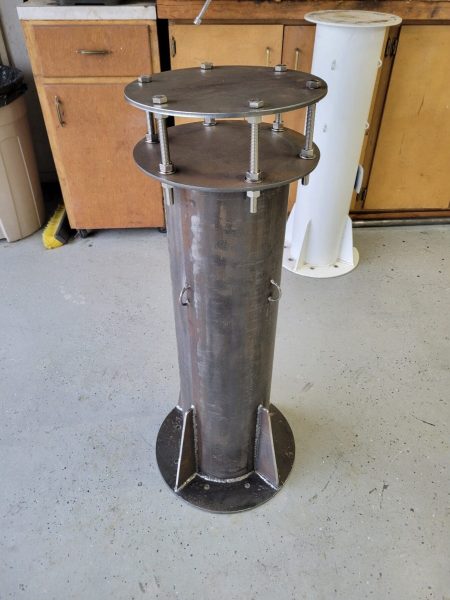
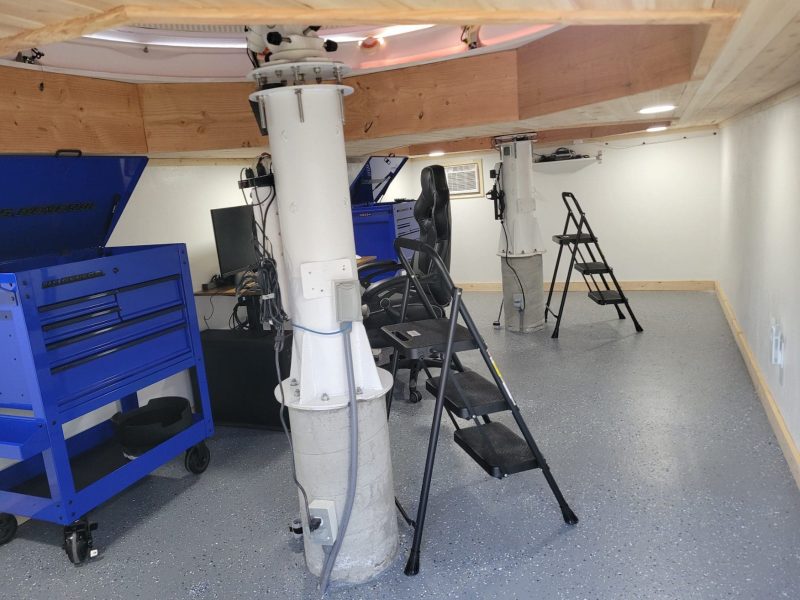
The piers are 12″ sonotubes poured with rebar and once set, we pulled the casing and poured another 1200lbs of concrete around the base of each pier for an extremely strong setup.
Slab Floor
The slab floor was poured at 4-5 inch thick over a gravel and chicken wire base. The piers are not isolated from the flooring, which may seem odd, but we do everything remotely and do not walk on or get any movement from the system as is.
Walls & Roof Construction
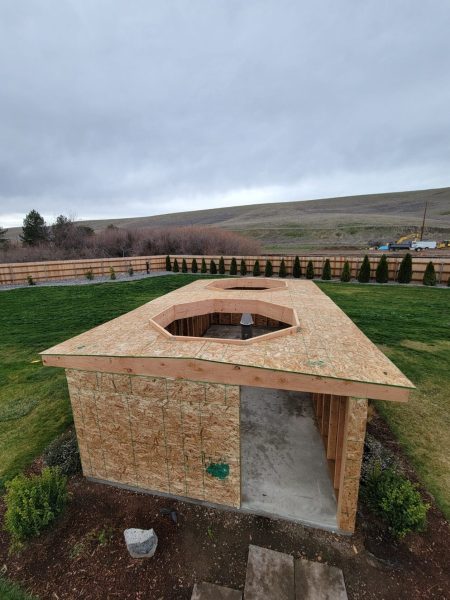
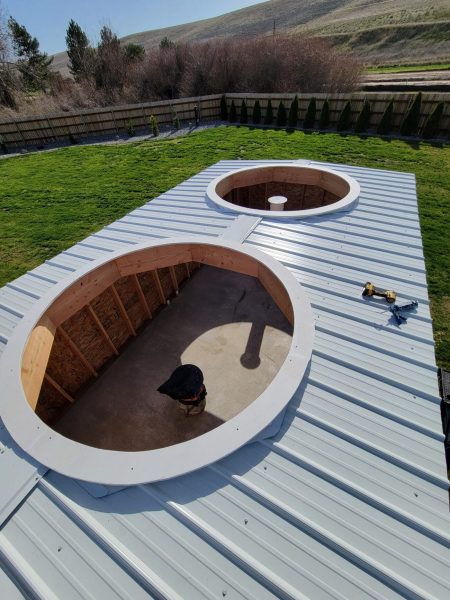
For the walls, we used 2×4 construction. The roof line was created with a minimal pitch to it and a combination of 2×12 spanners cut with a slight pitch.
Dome Ports
For the dome ports, this was tougher to calculate. Using CAD software and drawings, the hexigonal strucure was crated to create a perfect platform and roller diameter to match our dome pattern which we were going to be using.
Insulation
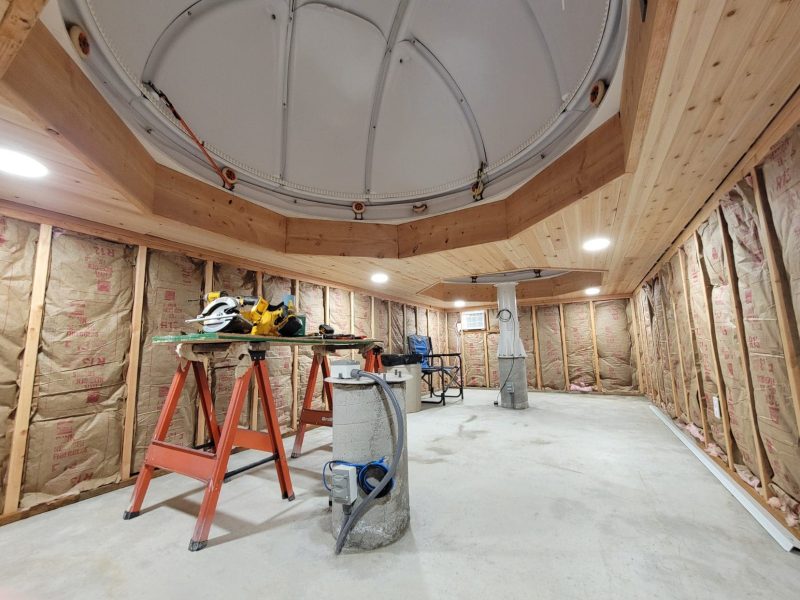
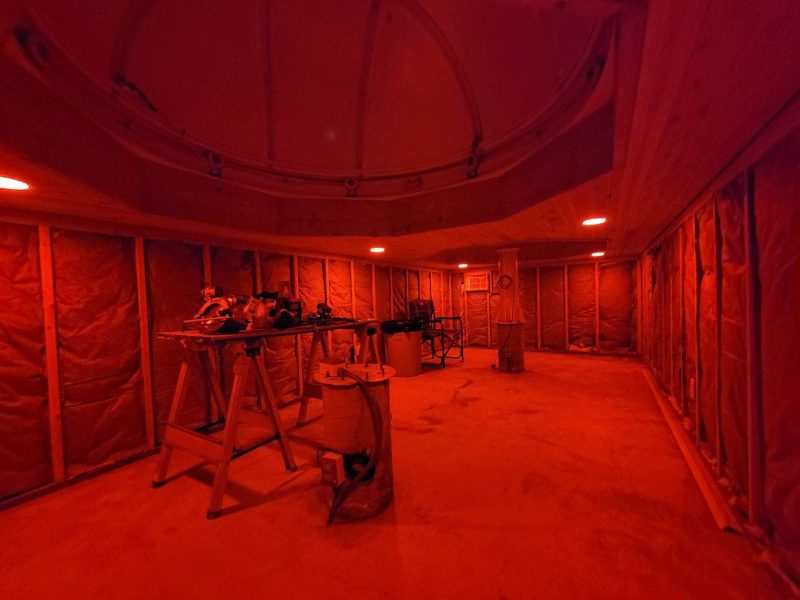
To accommodate better cooling and heating of the unit, it was fully insulated and power was provided for a wall-mount AC unit on the one end and the downwind area was powered with an exhaust unit. It’s always questionable to insulate or not an observatory, but after running it insulated, I’m glad we did. It stays around 90 degrees max when it gets over 110 degrees here, and yet cools quickly with a small wall AC unit to 70 degrees or outside temps with just exhaust before dusk.
Finish Work
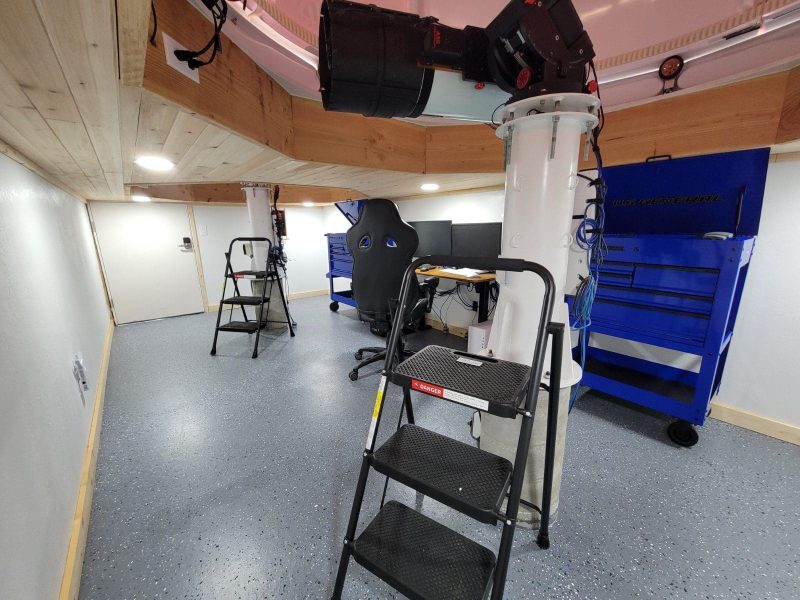
The entire observatory was meant to be a confortable clean room for all the equipement that would reside in it. Not just personal astrophotography equipment, but equipment we will be testing, building, and designing for clients and customers.
Finish Work
We wanted the walls to be finished, sheetrocked, taped, textured and painted. Molding around the unit along tongue and grove ceiling was used.
Lighting Needs
For lighting, we recessed 6 LED lights with color adjusting from a phone. The AC unit and Exhaust Fan can push cold air and pull out any hot air quickly within minutes and gives us lots of options to acclimatize if we need at any time from our phone.
Observatory Control
To make any observatory reliable, it needs a good safety monitor system and reliable opening and shutting systems.
With experience and stock NexDome rotator/shutter sytems, we knew this would not work. We had cross-talk between wireless shutter systems and the shutter mechanical structure was weak at best.
Custom Dome Software
Using open source EzDome observatory software available on GitHub, it was customized and flashed onto ESP32 boards. This provided a much more reliable bluetooth connection and independent shutter control for each rotator system. We engineered our own drive systems with dual motors and tracks.
Safety Monitoring
For safety monitoring, the system runs on a Lunatico Solo system with good rain detection, cloud detection, wind, and SQM monitoring. Both domes are very reliable with opening/shutting, and rotational properties.
Network & Security
The final observatory was finished with several tool chests and desk for remote computer work. Power and USB for the entire dome system was internally routed as well as conduit buried for cable runs to each pier.
Networking is all running wired ethernet via the home main Fiber Optic system for extremely fast transfer rates to each pier.
The entire system is remotely run and managed from inside the home, but can be easily controlled via computers in the observatory as well. Piers were all custom built and designed here to fit our specific needs.
The final observatory is extremely clean, protected, and reliable with secure digital access doorway and several observational cameras around to further enhance security.