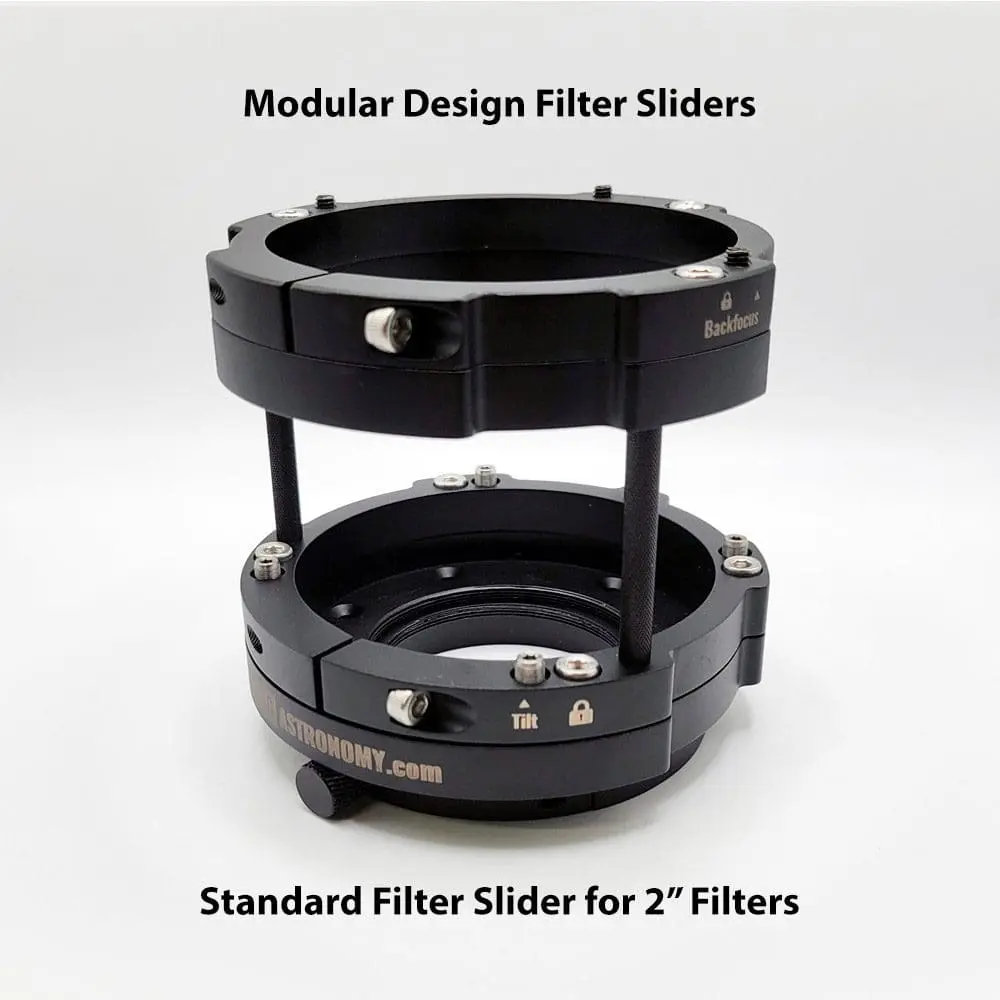
Removable filter sliders for every Photon Cage and Electronic Photon Cage. Two systems: Standard for 2-inch mounted filters, and PRO M68 for unmounted 50 mm and 50×50 glass.
Both mount to the same cages. The difference is the filters you use and the light your sensor needs.
Standard system
PRO M68 system
Filters
2-inch mounted (screw-in)
Unmounted 50 mm round or 50×50 square
Baseplate
42, 48 or 54 mm
M68
Sliders
3D printed or CNC aluminum
3D printed (50 mm round) or CNC aluminum (50×50)
Best for
2-inch filter sets on most sensors
Full-frame sensors and fast optics that need more light
Fits
Every Photon Cage and Electronic Photon Cage, on the ASG 5-bolt slider pattern
Standard filter slider system
For 2-inch mounted filters
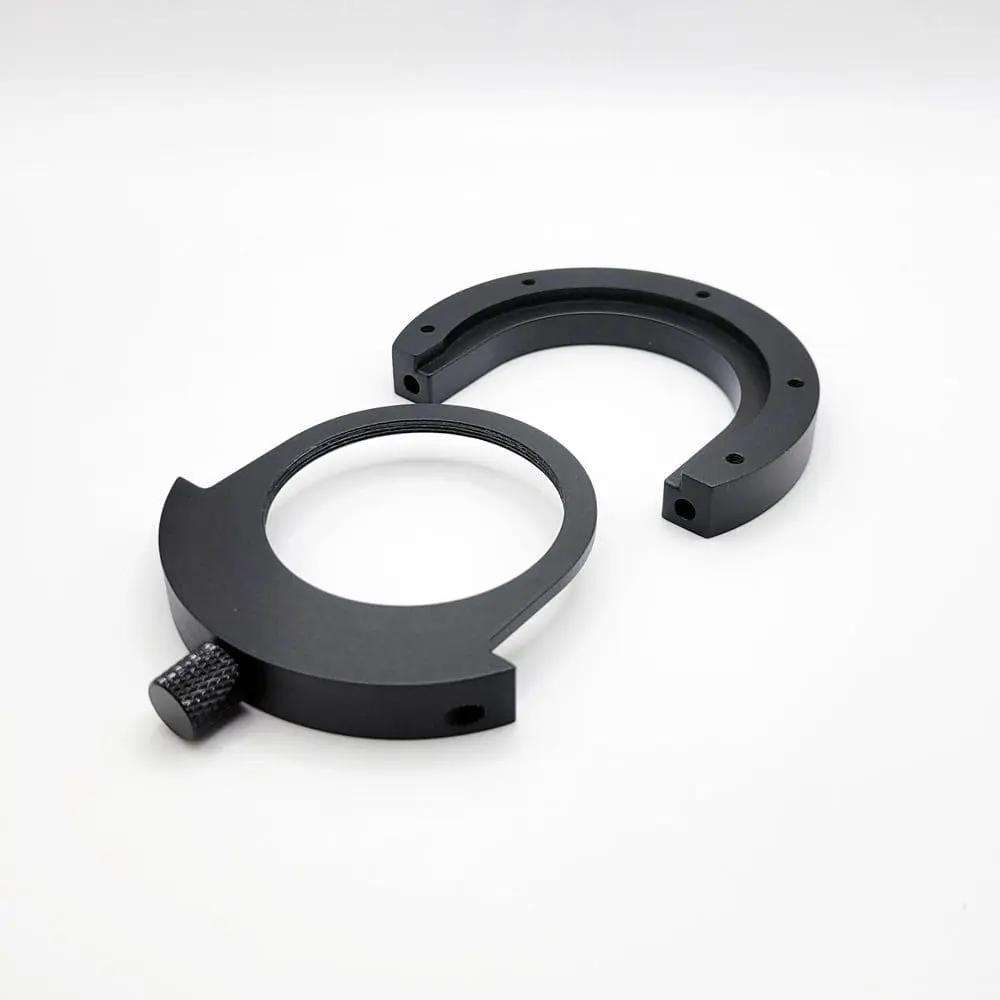
The Standard system takes your 2-inch screw-in filters. Each slider threads onto a filter and slides into the holder, so changing filters is a quick swap with no tools.
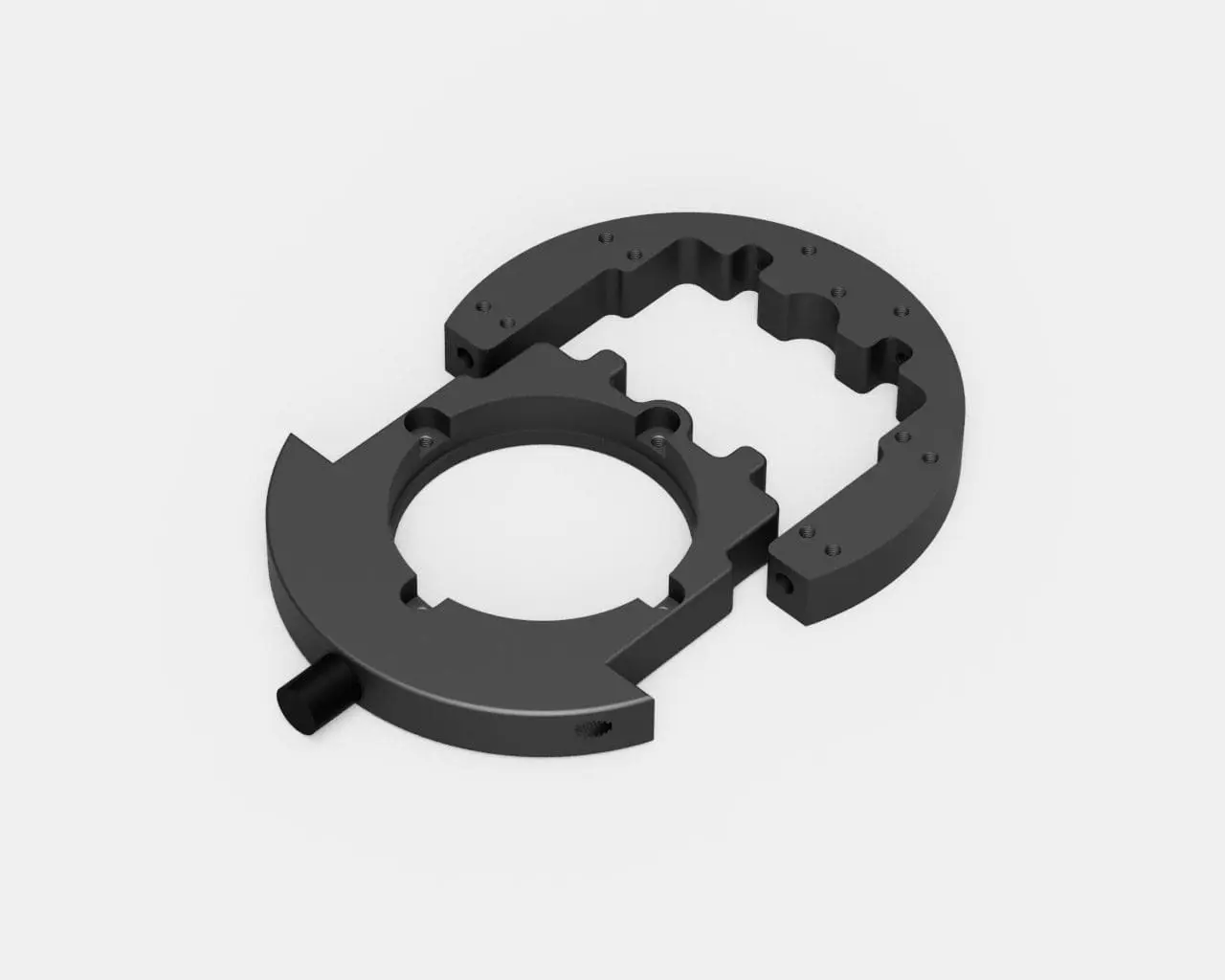
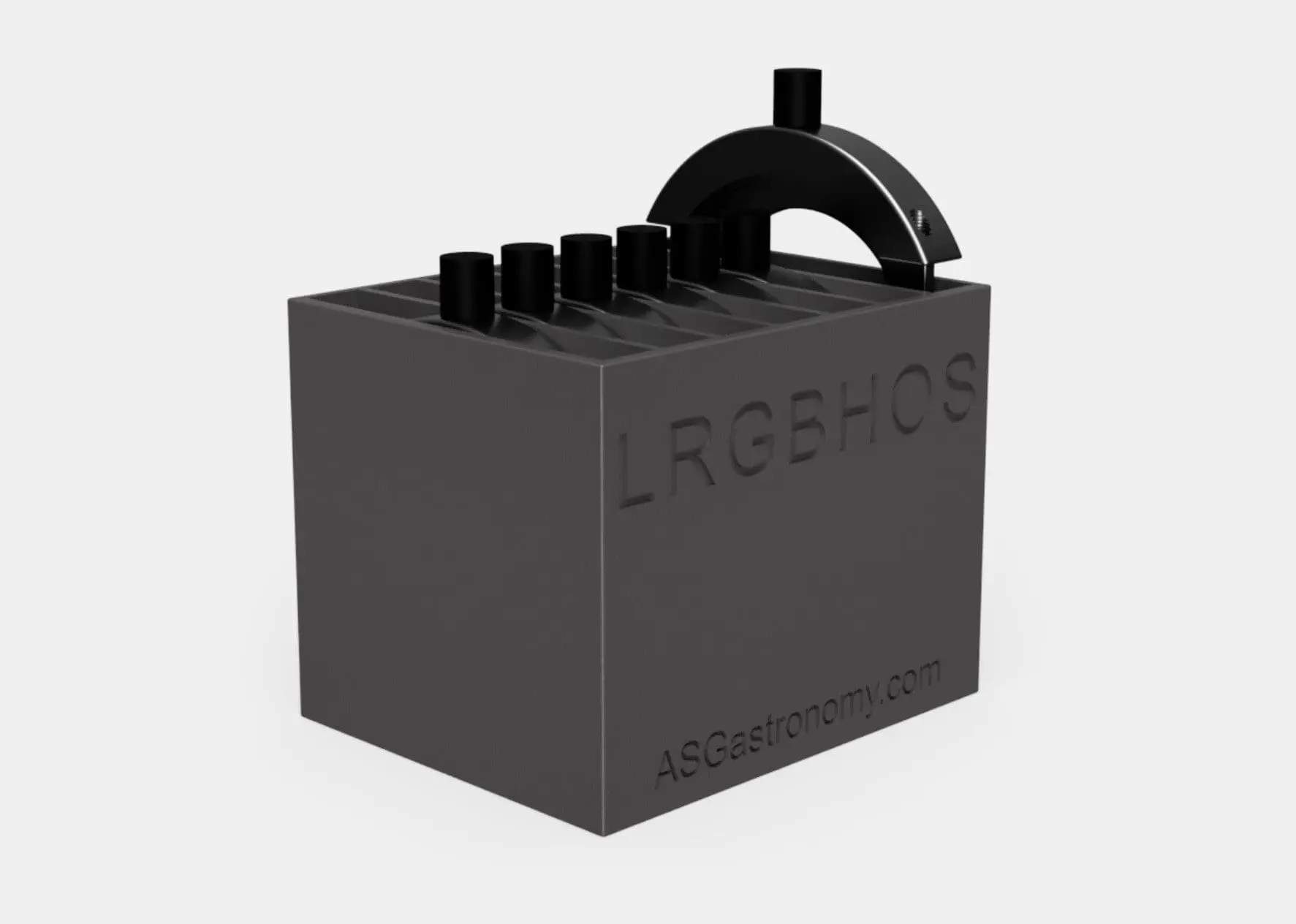
The PRO system is designed specifically for unmounted filters. It steps up to an M68 baseplate with dedicated holders, so 50 mm round or 50×50 square glass sits in front of full-frame sensors with more light to the corners.